Skip to content
MessiCleats
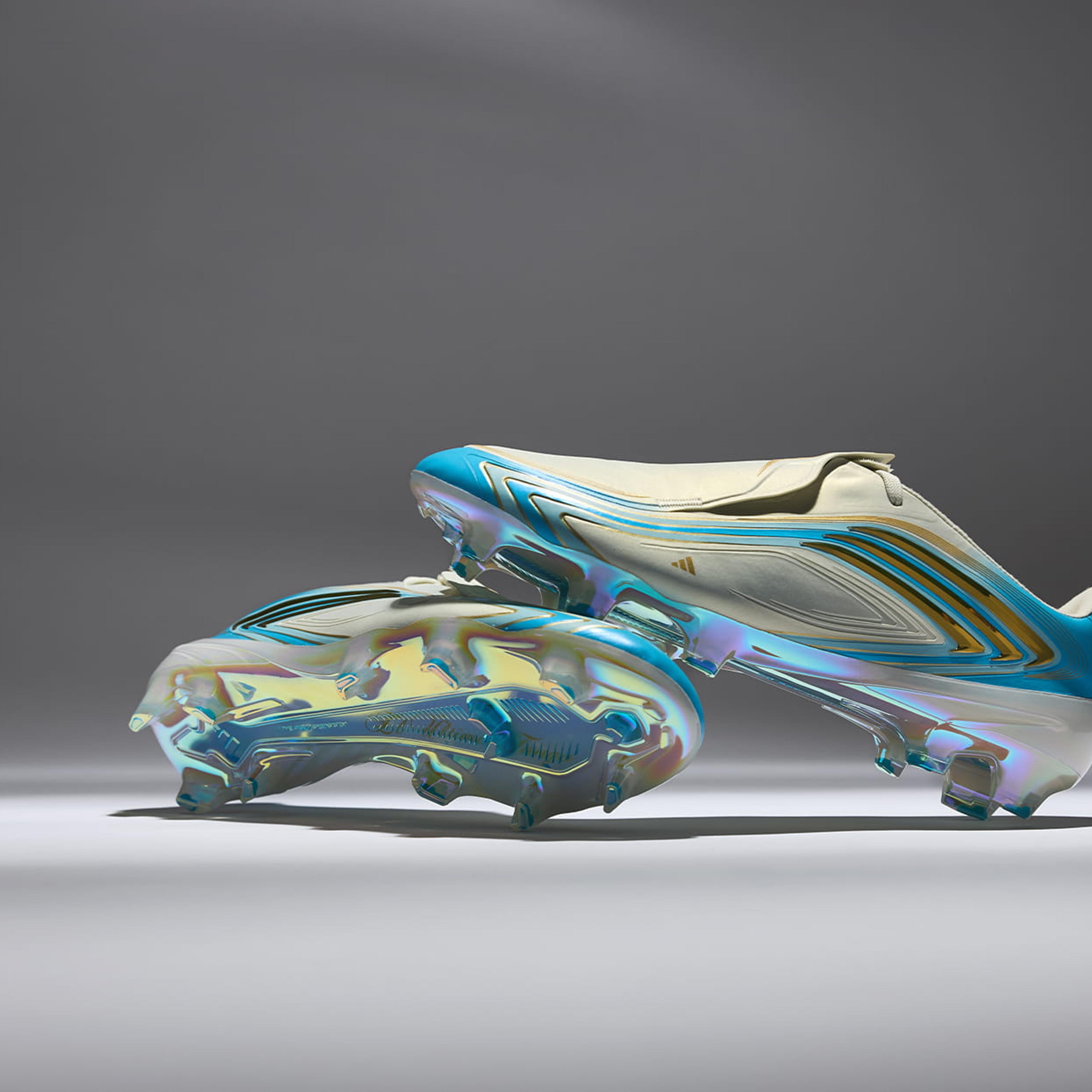
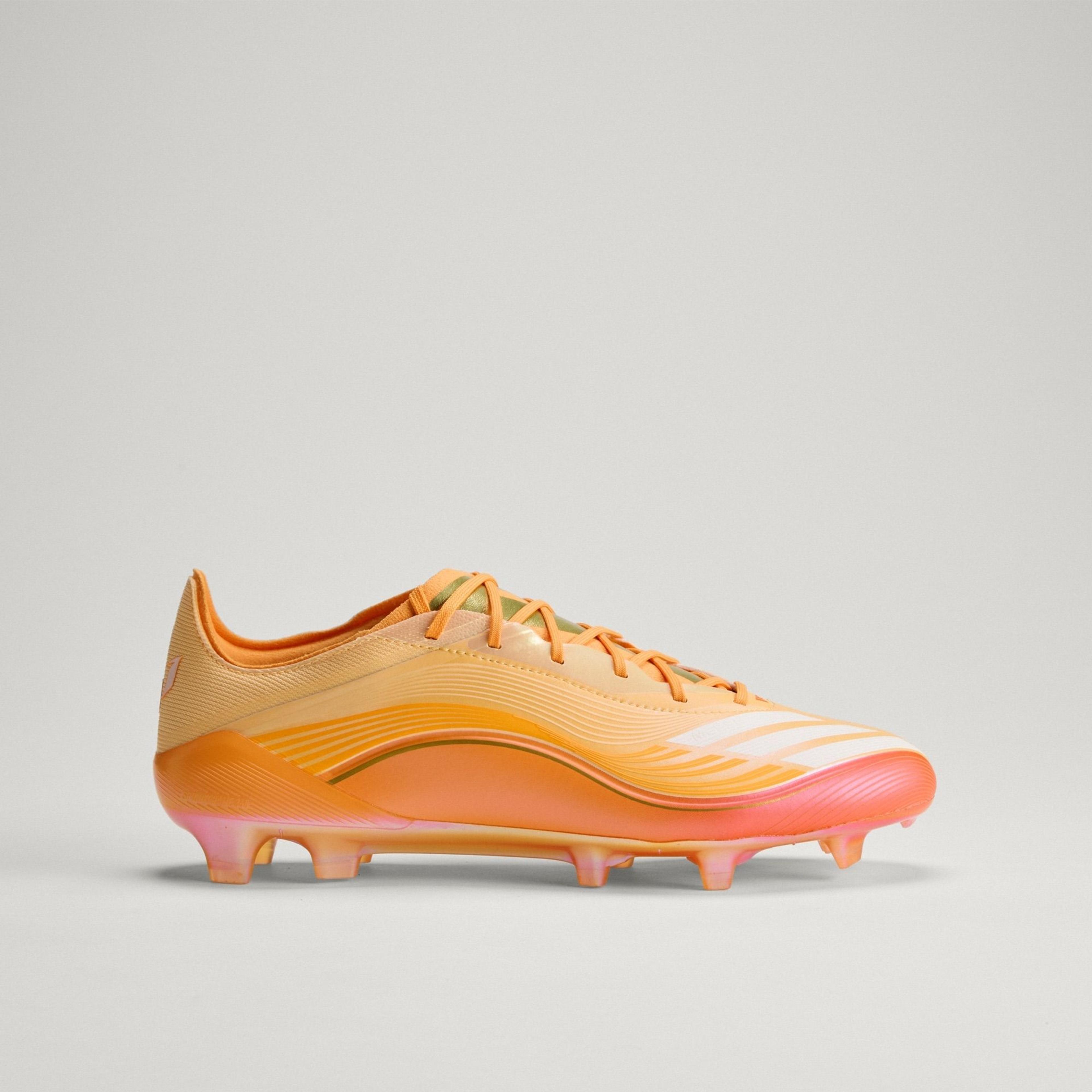
adidas F50.6 Tunit "X-32" USA 2006 World Cup colourway
Early adidas — TUNiT Era (2006–2010)

adidas +F50.6 Tunit

The +F50 TUNiT system, including the F50.6 configuration, retailed at approximately £120 as a standard (non-limited) adidas product, sold through mainstream football boot retailers across markets where adidas distributed its World Cup 2006 boot range. It was not a Messi-exclusive or limited-edition product at the time of release; his pairs were drawn from the same retail-available TUNiT components as other sponsored professionals. In later years, adidas has periodically revisited the F50.6 Tunit silo for nostalgic remake releases (including special-edition drops referencing Messi's early career), but those are modern retrospective products distinct from the 2006 originals.

Discontinued

No longer sold new. Pairs surface on resale marketplaces — see the collector's guide.

Brand
adidas
Silo
F50
Year
2006
Era
Early adidas — TUNiT Era (2006–2010)
Overview

The adidas +F50.6 Tunit was the boot Lionel Messi wore during his first FIFA World Cup, at Germany 2006 — a tournament that marked his senior international debut on football's biggest stage at just 18 years old. Launched globally by adidas on 31 January 2006, the F50.6 Tunit was the first true expression of adidas's revolutionary "TUNiT" modular system, which let players mix and match interchangeable uppers, chassis (soleplates), and stud configurations. Messi began wearing it in March 2006, just weeks after signing with adidas and only a month after briefly wearing the outgoing F50+, making the F50.6 Tunit effectively his first "real" adidas boot — the first pair built on the technology platform adidas would keep him in for the next three-plus years.

Release timeline
  • 31 January 2006: adidas unveils the +F50 TUNiT modular boot concept at a launch event in Germany, ahead of the World Cup it would host that summer.
  • February 2006: Messi signs with adidas and initially wears the outgoing F50+ model for a brief period.
  • March 2006: Messi transitions into the +F50.6 Tunit, wearing it through the spring and into the 2006 World Cup.
  • March–November 2006: Documented as Messi's primary boot for essentially the entire calendar year, spanning La Liga run-in, pre-World Cup friendlies, the World Cup itself (June–July 2006), and the start of the 2006–07 season.
  • June–July 2006: 2006 FIFA World Cup in Germany — Messi's first World Cup, wearing the F50.6 Tunit throughout Argentina's run, which ended in a quarter-final penalty-shootout loss to hosts Germany.
Technology & design

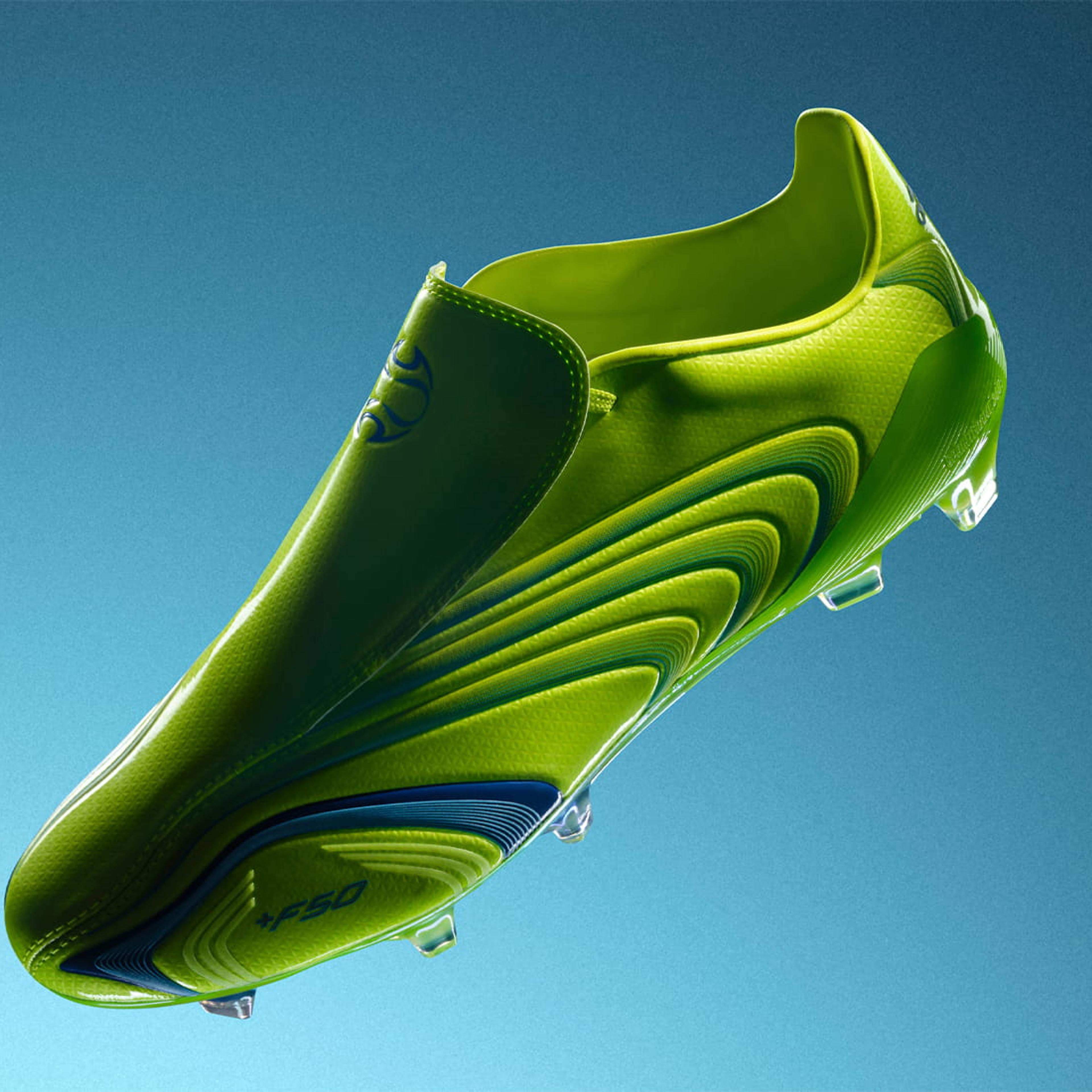
The F50.6 Tunit represented what adidas itself called "the first big left-turn for the F50 range" — a jump from the relatively simple, mostly-fixed construction of the original F50 and F50+ into a genuinely modular, high-tech product built around three fully interchangeable sections:

  • The Upper: Made from adidas's lightweight "adiHex" microfibre material, available in multiple bold colours, featuring a clean lace-cover for an uninterrupted striking surface and a snug, sock-like fit.
  • The Chassis (soleplate): Offered in three distinct options depending on player preference — a Lightweight Chassis built with ClimaCool ventilation for minimum weight, a Comfort Chassis with extra cushioning at the heel and forefoot, and an Orthopedic Chassis with a reduced stock sock-liner designed for players who used personal orthotic insoles.
  • The Studs: A separate, swappable stud module that let players change traction configuration (soft ground, firm ground, etc.) to match pitch and weather conditions on any given matchday — all without needing an entirely different pair of boots.

This "build-your-own-boot" system was pitched by adidas as giving elite players unprecedented personalization, and it was showcased prominently at the 2006 World Cup, where U.S. national team players such as Steve Ralston, Pablo Mastroeni and Pat Noonan also wore customized TUNiT configurations, alongside adidas-sponsored stars like Arjen Robben and Kevin Kuranyi. adidas's climaCool mesh venting technology was marketed as delivering "a 360-degree cooling effect" across the foot. Reported retail pricing for the TUNiT system was around £120.

Reception to the system among elite players was mixed in the years that followed — some outlets note the modular studs had a reputation for occasionally working loose, and the synthetic upper material was criticized by some testers as feeling slightly "plasticky" compared to leather. Multiple retrospective sources note that Messi, despite having the full TUNiT customization system available to him, generally preferred a streamlined, stable setup — closer in spirit to a fixed-stud boot — over experimenting extensively with the modular options, prioritizing a consistent underfoot feel he could rely on without thinking about it once a match began.

Colorway & aesthetic

Boot-history archives note Messi's F50.6 Tunit pairs during this period, and general retail colourways available across the TUNiT range included red, blue, white, black, and country/team-specific editions (such as Brazil's yellow and England- and France-tied colour schemes) reflecting the boot's role as an official World Cup product across many adidas-sponsored national federations. A commonly referenced Messi/Argentina-associated colourway from this generation was a blue, white and gold combination echoing the Argentina national strip — consistent with adidas's broader approach of tying its national-team-sponsored players' boots to home-country colours during major tournaments. As with the F50+, this was not yet a bespoke signature product built exclusively for Messi; he wore configurations drawn from the same TUNiT catalogue available to other adidas athletes.

Story & campaign

The F50.6 Tunit's launch was one of adidas's biggest football-boot technology stories of the mid-2000s, timed deliberately to coincide with the build-up to the World Cup adidas was hosting on home soil in Germany. It was marketed less around any single athlete and more around the innovation itself — the idea that a player could now tune a single boot platform to their exact preferences in fit, cushioning, and traction, rather than choosing between entirely separate models. For Messi specifically, the boot's significance is almost entirely biographical rather than promotional: it was the boot on his feet as he transitioned from a promising Barcelona academy product into a senior full international, making his World Cup debut for Argentina.

Messi's run-up to the tournament was complicated by injury; he was troubled by a hamstring/muscle problem in the lead-up to and during the 2006 World Cup, which limited his game time — he made only sporadic appearances, including as a substitute, rather than starting every match, and Argentina's head coach José Pekerman was criticized after the tournament for not using Messi more, especially in the crucial quarter-final loss to Germany on penalties. Even so, Messi did score during the tournament: he came on as a substitute against Serbia and Montenegro in the group stage and scored Argentina's sixth goal in a 6–0 win, becoming (at the time) the youngest player to score for Argentina at a World Cup finals.
Notable matches & moments
  • June 2006: Messi's senior World Cup debut for Argentina at Germany 2006, wearing the F50.6 Tunit.
  • 16 June 2006: Messi comes off the bench against Serbia and Montenegro and scores in Argentina's 6–0 group-stage win — his first World Cup goal, and at the time the youngest Argentine to score at a World Cup finals.
  • June–July 2006: Argentina reach the quarter-finals before being eliminated by host nation Germany on penalties following a 1–1 draw; Messi's restricted playing time (including being an unused substitute in that quarter-final) was a talking point after the tournament.
  • March–November 2006: The F50.6 Tunit remained Messi's primary club boot for Barcelona through the second half of the 2005–06 season (in which Barcelona won the Champions League, though Messi missed the final itself through injury) and into the start of 2006–07.
Sources
  1. 01Full list – All Messi Boots (allmessiboots.wordpress.com)
  2. 02Messi, 2006 and the adidas F50 TUNiT - Pro:Direct Soccer
  3. 03adidas shows first modular soccer boot - New Atlas
  4. 04Adidas +F50 TUNiT - Footy Boots
  5. 05Football Boots Vault - adidas F50.6 Tunit Football Boots - SoccerBible
  6. 06History of the Adidas F50 - footy-guru.blogspot.com
  7. 07Adidas F50 History and Evolution - Soccer Source Coaching
  8. 08Lionel Messi's World Cup boots (2006 → 2026) - Planeta Fobal
  9. 09How Adidas tapped into motorcycle culture to create Messi's retro iridescent World Cup cleats - Fast Company
  10. 10Adidas F50 Messi 2026 World Cup 'El Último Tango' Signature Boots Released - Footy Headlines
  11. 11Boot Timeline | Leo Messi - SoccerBible
  12. 12Lionel Messi's World Cup appearances by year: Timeline from 2006 debut to first FIFA title - Yahoo Sports
How this entry was built
Compiled from the sources above and cross-checked where possible. Where they disagree — on exact dates, prices or production numbers — that's flagged rather than smoothed over. See our methodology.
Related boots