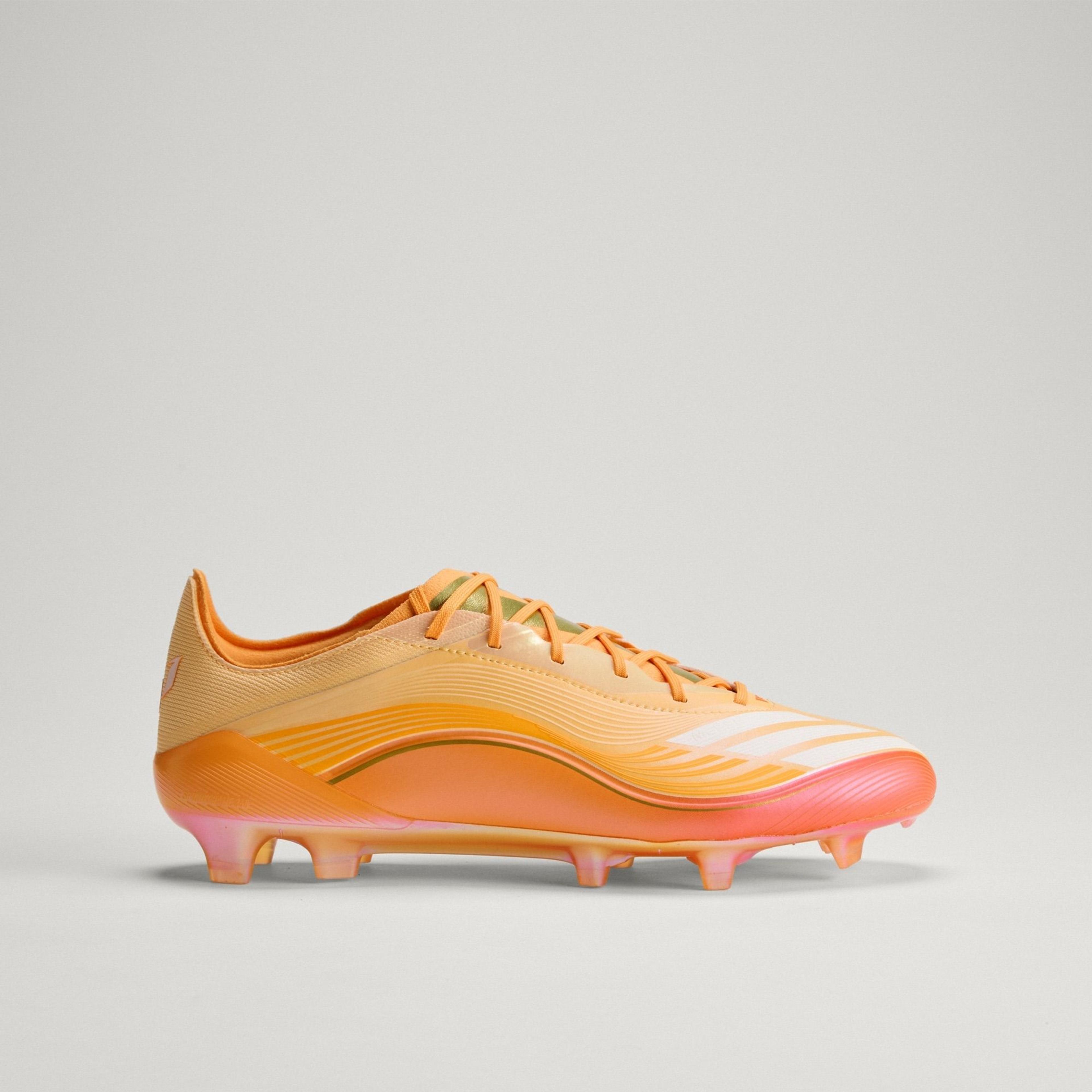
adidas F50
This archive holds 25 adidas F50s worn by Messi across two separate lifetimes of the silo: the TUNiT years, the adiZero era, and the 2024 revival. Here they are in order, with what actually changed at each step.
This archive documents 25 adidas F50s worn by Lionel Messi. It is not a complete census of every colorway he ever laced up: adidas produced Messi F50 editions, particularly in the TUNiT and early adiZero years, that are thinly documented and not catalogued here. They fall into two separate lifetimes of the silo, separated by nine years in which the F50 did not exist. Six boots came in the TUNiT era between 2006 and 2010 (one pre-TUNiT F50+ and five modular TUNiT boots), eight on the adiZero platform between 2010 and 2014, and eleven since adidas brought the name back in June 2024. No other boot line comes close in his career. The F50 is the silo he signed into, the silo he won a Ballon d'Or run in, and the silo he is wearing right now at Inter Miami.
This page covers the ones in the archive, in order, with what actually changed at each step.
What "F50" means as a design philosophy
The F50 is adidas's speed silo. Everything about it is subordinated to one goal: get the boot out of the way of the player. That means low weight, a thin upper with as little padding as possible, a stripped soleplate, and a clean striking surface, historically achieved with hidden or covered laces. Where the Predator adds material to the boot to change how the ball behaves, the F50 removes it.
The line launched in 2004, two years before Messi joined adidas. The name is commonly explained as "Football 50," a reference to 1954, the year West German players used exchangeable screw-in studs at the World Cup, which is also why interchangeable studs have been part of the F50 story from the start. adidas has not published a definitive account of the naming, so treat that as the widely repeated version rather than a confirmed one.
Generations at a glance
Generation Years Core platform Messi pairs TUNiT era 2006–2010 One pre-TUNiT F50+, then five modular upper / chassis / stud boots 6 adiZero era 2010–2012 Sprintskin + Sprintframe, ~165g 4 First Messi signature F50s 2013–2014 adiZero III / IV, Hybridtouch 4 F50 revival 2024–2026 Sprintframe 360 + HybridTouch 11
The TUNiT years (2006–2010)
Messi signed with adidas in February 2006 after his relationship with Nike soured. The F50 was what adidas happened to have in the speed slot at that moment, so that is what he got.
- adidas F50+ (2006): the literal first pair of adidas boots Messi laced up as a sponsored athlete, worn for a matter of weeks. Known to collectors for its spider-web patterned upper. It was not built for him, it was not a TUNiT boot, and he was moved off it almost immediately.
- adidas +F50.6 Tunit (2006): his first real adidas boot, worn from March 2006 and through Germany 2006, his first World Cup at 18. It was also the first genuinely modular one: a swappable adiHex microfibre upper, chassis and stud modules.
- adidas +F50.7 Tunit (2007): a refinement rather than a rethink, keeping the three-part architecture with revised upper and stud options.
- adidas +F50.8 Tunit (2008): pushed the platform lighter and cleaner, with a translucent heel and sole unit marketed under the "Alles Klar" tag.
- adidas +F50.9 Tunit (released 1 November 2008, so a 2008/09-season boot): brought back the seamless lace cover of the original 2004 F50 and introduced an "AdiGrip" microfibre upper. A deliberate reaction against how plasticky the mid-TUNiT boots had become.
- adidas +F50i Tunit (2009): the most important boot of the era. Its SprintSkin single-layer synthetic upper, reportedly the first of its kind in football, was the direct technical ancestor of everything that followed.
What TUNiT actually was, and why it went away
TUNiT was a modular boot: three separately purchasable components (upper, chassis/soleplate, and stud modules) that a player could recombine for pitch and weather. Buy one boot, own several. It was genuinely novel and it looked like the future in 2006.
It was gone by 2010. adidas has never published a single stated reason, so anyone telling you exactly why is guessing. What is observable is that the direction of travel ran against it: TUNiT's real appeal was configurability, and the market moved decisively toward raw lightness instead. Every joint, hinge and swappable interface in a modular boot is weight and complexity a one-piece construction does not carry. The F50i's SprintSkin upper pointed at where adidas was actually going, and a year later the adiZero got there by throwing the modularity out entirely.
The adiZero years (2010–2012)
This is the run that made the F50 famous. The 2010 adiZero was a ground-up redesign built around one number.
- adidas F50 adiZero "Chameleon" (2010): roughly 165g in the synthetic version, marketed by adidas as the lightest football boot ever produced. Messi was the face of the launch, and the purple/holographic Chameleon colorway was marketed as his signature pairing within the launch range. It reached retail rather than staying a player-only sample. He wore it at the 2010 World Cup.
- adidas F50 adiZero II (2011): the same minimalist platform, with a full-grain adiLite leather upper option that Messi personally preferred over the stock synthetic.
- adidas F50 adiZero miCoach "Ballon d'Or 2011" (2011): the miCoach SPEED_CELL chip sat in a slot beneath the sockliner and logged speed, sprints and distance. adidas product manager Andreas Konrads called it the world's first boot with a brain.
- adidas F50 adiZero III "Ballon d'Or 2012" (awarded and released January 2013): a celebratory dressing on the same minimalist platform, marking the fourth and last of his four consecutive Ballon d'Or wins (2009 through 2012).
The Messi signature F50s (2013–2014)
By 2013 the signature treatment was well established (SoccerBible dates the first signature F50 adiZero to the 2010/11 season), and these are the editions from the run this archive holds.
- adidas F50 adiZero III Messi "Light Up The Pitch" (2013): a 1.5mm Sprintskin Dualmax upper and an embossed rubber forefoot texture for ball grip, still around 165g.
- adidas F50 adiZero III "370 Goals Record" (2014): an asymmetric left/right special marking his Barcelona scoring record, with graphics breaking down how the goals were scored.
- adidas F50 adiZero IV Messi "Battle Pack" (2014): his 2014 World Cup boot, part of adidas's angular Battle Pack graphic programme.
- adidas F50 Messi "Mirosar10" (2014): "mi Rosario" plus his number. The last F50 of the original run, and widely reported as one of Messi's own favourites. Its Hybridtouch upper is the same material family adidas still uses today.
The 2015 retirement
The F50's speed role passed to the X 15. The X line never quite replaced what the F50 had been culturally, and after more than eight years adidas ended it and brought the F50 name back instead.
The F50 revival (2024–2026)
adidas relaunched the F50 in June 2024. SVP of Product and Design Sam Handy framed it as an answer to a game "dominated by tactics, statistics, and often rigid tactical structures" where "sometimes out-and-out speed is the only way of breaking the game."
- F50 Messi "Triunfo Dorado" (June 2024): the first Messi F50 of the new era, worn as Argentina won the 2024 Copa América.
- F50 Messi "Triunfo Estelar" (2024): the HO24 season colorway, spec-matched to his actual match pairs.
- F50 Messi x Bad Bunny (October 2024): a limited collaboration in the Cardboard/Cream White/Bright Cyan colorway, with both men's names embossed at the instep alongside their national flags.
- F50 Messi "La Vida Rapida" (2025): introduced the jagged haptic line treatment that replaced the smoother lines of the Triunfo boots.
- F50 Messi "La Vida Tropical" (2025): same platform, pink-to-blue gradient soleplate.
- F50 Messi "Prestig10" (2025): thin Fibertouch upper with Sprintweb 3D texture for wet-weather grip.
- F50 Messi "Vis10n" (2025): a materials-and-graphics refresh on the Prestig10 base, with Lightstrike Pro foam in the Elite Plus version.
- F50 Messi Elite Tunit (2026 Remake) (January 2026): the 2006 F50.6 upper aesthetic on a modern fixed soleplate. Explicitly not modular.
- F50 Messi "Aurora Radiante" (February 2026): HybridTouch upper, Sprintframe 360 plate, dual sockliner, roughly 190g and at least 20% recycled content.
- F50 Messi "Hora Dorada" (April 2026): he returned to it after the World Cup and is wearing it now.
- F50 Messi "El Último Tango" (June 2026): his 2026 World Cup boot, built on adidas's F50 Hyperfast platform with a Halocage+ TPU frame and a HybridTouch+ outer layer, styled as a callback to the boots he wore at his first World Cup in 2006. He broke the men's all-time World Cup scoring record in it, passing Miroslav Klose's 16 goals; Argentina lost the final 1-0 to Spain in extra time.
Where the line stands now
The revived F50 is not the weight-obsessed object the 2010 adiZero was. The Aurora Radiante is reported at around 190 grams against the adiZero's roughly 165. The modern boot buys back structure, lockdown and underfoot energy return at the cost of about 25 grams. The other honest observation is that the 2024–2026 releases are one platform, not five: Sprintframe 360, a HybridTouch or Fibertouch upper, and the burrito-style Compression Fit tongue, refreshed with new colorways and graphics. adidas is iterating, not redesigning. The El Último Tango is the one genuine step, moving to the F50 Hyperfast platform, and even that is dressed as a callback to 2006.
You can also see the whole arc on the full boot timeline.
Buying an F50
New. Current Messi F50s are in general retail. Elite-tier pairs sat at roughly $270–$280 as of August 2026, with Pro, League and Club tiers running well below that in the same colorway. The League tier has been seen under $100. Shop the current range at the adidas Messi storefront. We earn a commission on purchases made through that link; it does not change what we write here.
Older. Everything from the TUNiT and adiZero eras is resale-only, and condition is the whole game. Synthetic uppers and TPU soleplates from 2006–2014 degrade whether or not the boot was worn. Start with eBay or StockX, and read the vintage Messi boots collector's guide before you bid on anything from the TUNiT years: modular boots are frequently listed incomplete. If you just want something to play in, the best Messi boots to buy in 2026 is the more useful starting point.
Frequently asked
What does F50 stand for?
The commonly cited explanation is "Football 50," a reference to 1954, the year West German players used exchangeable screw-in studs at the World Cup, which is also why interchangeable studs featured in the line from its 2004 launch onward. adidas has not published a definitive account of the naming, so this is the widely repeated version rather than a confirmed one.
What F50 is Messi wearing now?
The F50 Messi "Hora Dorada," launched April 14, 2026. He wore it before the World Cup, switched to the "El Último Tango" for the tournament itself, and returned to the Hora Dorada afterward.
What was the lightest F50 Messi wore?
The 2010 F50 adiZero "Chameleon," roughly 165g in the synthetic version, which adidas marketed at the time as the lightest football boot ever produced. Current F50s are heavier: the 2026 Aurora Radiante is reported at approximately 190g, trading weight for structure and underfoot energy return.
How many TUNiT F50s did Messi actually wear?
Five. He wore six F50s between 2006 and 2010, but the first of them, the 2006 adidas F50+, worn for only a few weeks, was not a TUNiT boot. The modular TUNiT run for him starts with the F50.6 in March 2006 and ends with the F50i.
Can you still buy the original TUNiT F50 boots?
Only on the resale market, and carefully. TUNiT boots were sold as separate uppers, chassis and stud modules, so listings are frequently incomplete, and synthetic uppers and TPU soleplates from 2006–2010 degrade with age regardless of wear. adidas released a 2026 remake of the F50.6 Tunit, but it uses a fixed modern soleplate rather than the original modular system.
Early adidas, TUNiT Era (2006–2010)


adiZero Era, Pre-Signature (2010–2013)


First Messi-Branded Signature Boots (2013–2015)


F50 Revival (2024–2026)

adidas F50 Messi "Triunfo Dorado"

adidas F50 Messi "Triunfo Estelar"

adidas F50 Messi x Bad Bunny
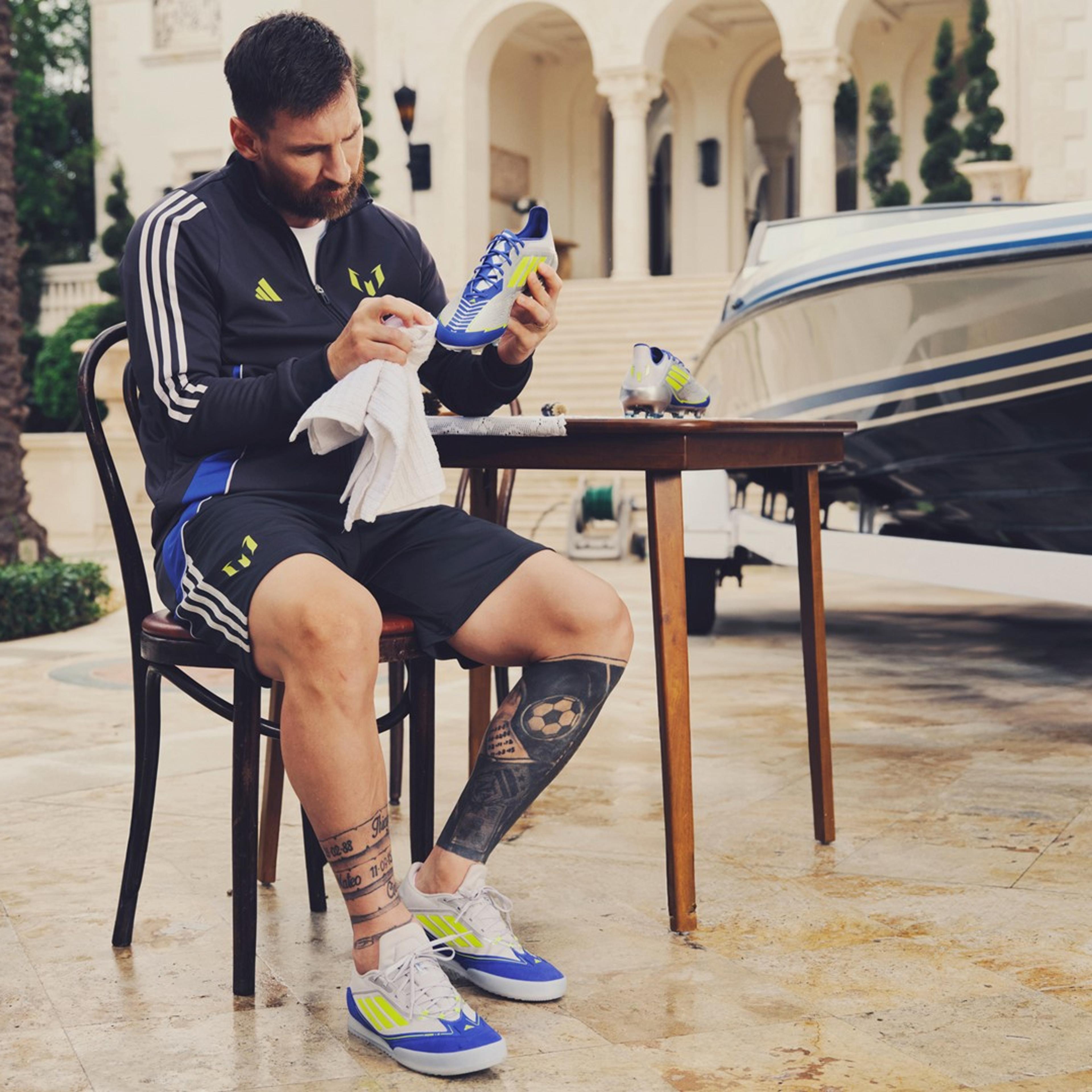
adidas F50 Messi "La Vida Rapida"

adidas F50 Messi "La Vida Tropical"

adidas F50 Messi "Prestig10"

adidas F50 Messi "Vis10n"
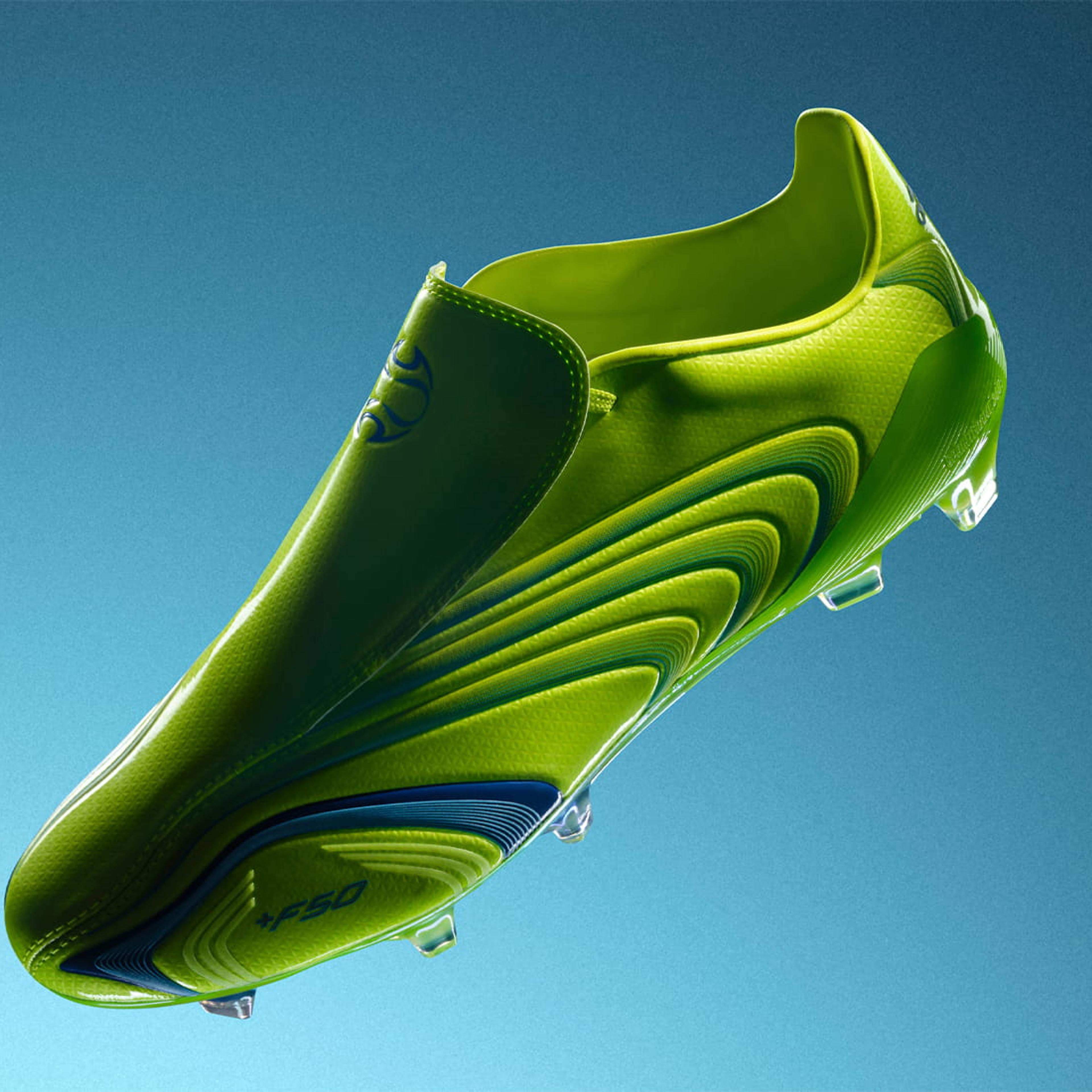
adidas F50 Messi Elite Tunit (2026 Remake)
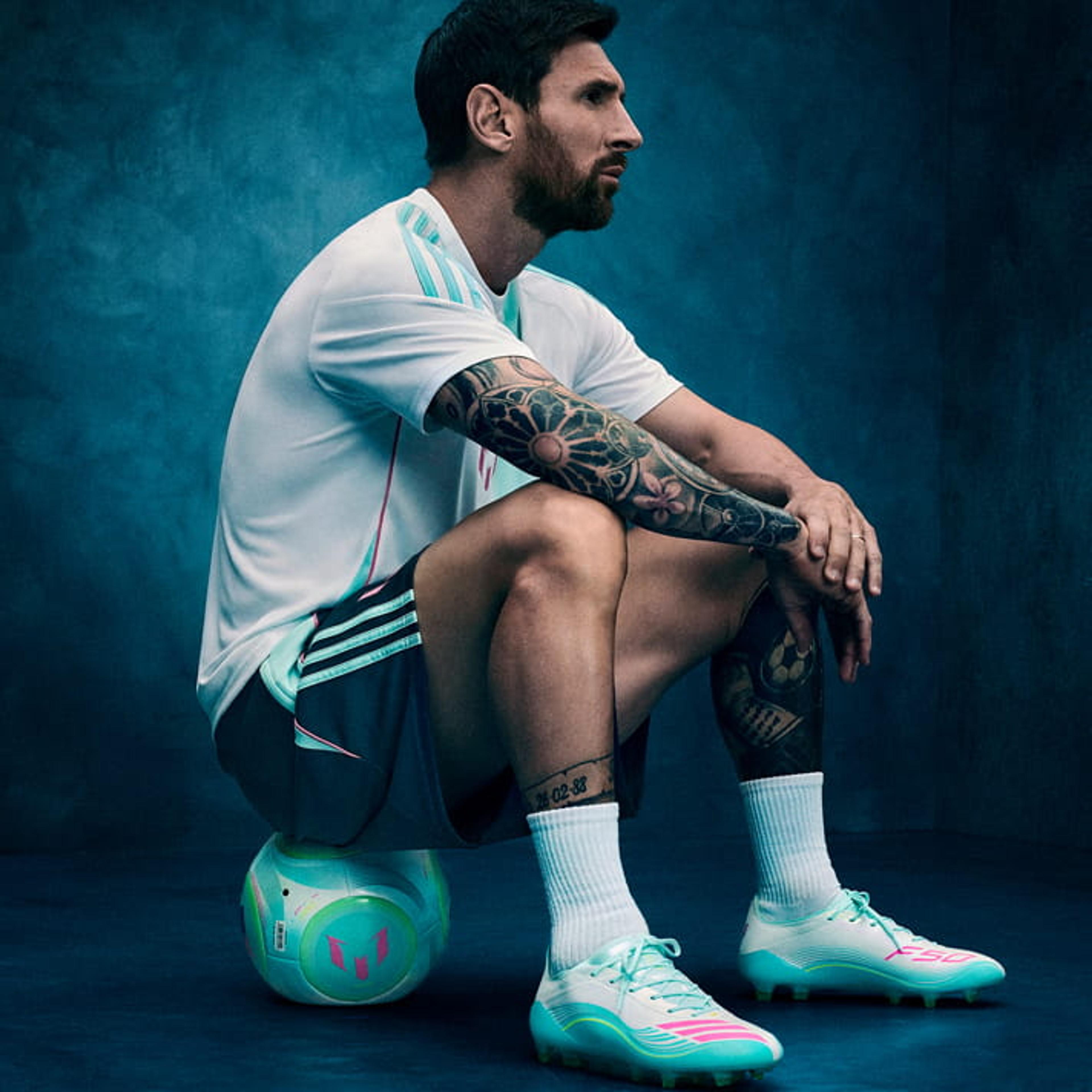
adidas F50 Messi "Aurora Radiante"
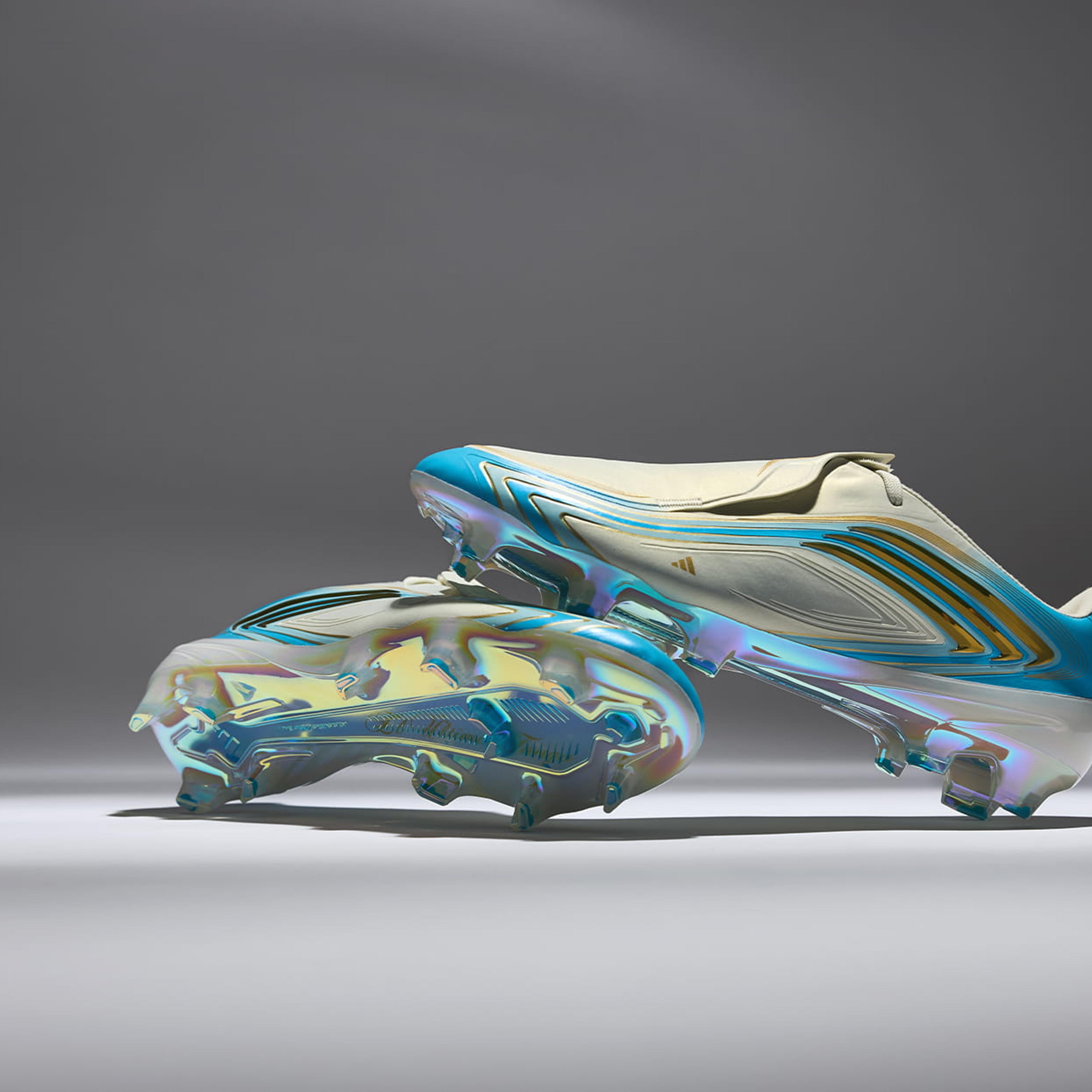
adidas F50 Messi "El Último Tango"